Selling an investment property in Australia can yield significant profits, but it's essential to understand the tax implications, particularly understanding Capital Gains Tax (CGT). CGT is the tax you pay on the profit made from selling assets like investment properties. However, with proper planning and knowledge, you can potentially reduce your CGT liability. starinvestment.com.au realestate.com.au

Understanding Capital Gains Tax is not a separate tax but part of your income tax. It applies to the profit (capital gain) you make when you sell an asset for more than its cost base. The cost base includes the purchase price plus associated costs like stamp duty, legal fees, and capital improvements.blogs.liviti.com.au
Example:
This $200,000 gain is added to your assessable income and taxed at your marginal tax rate.propertytaxspecialists.com.au
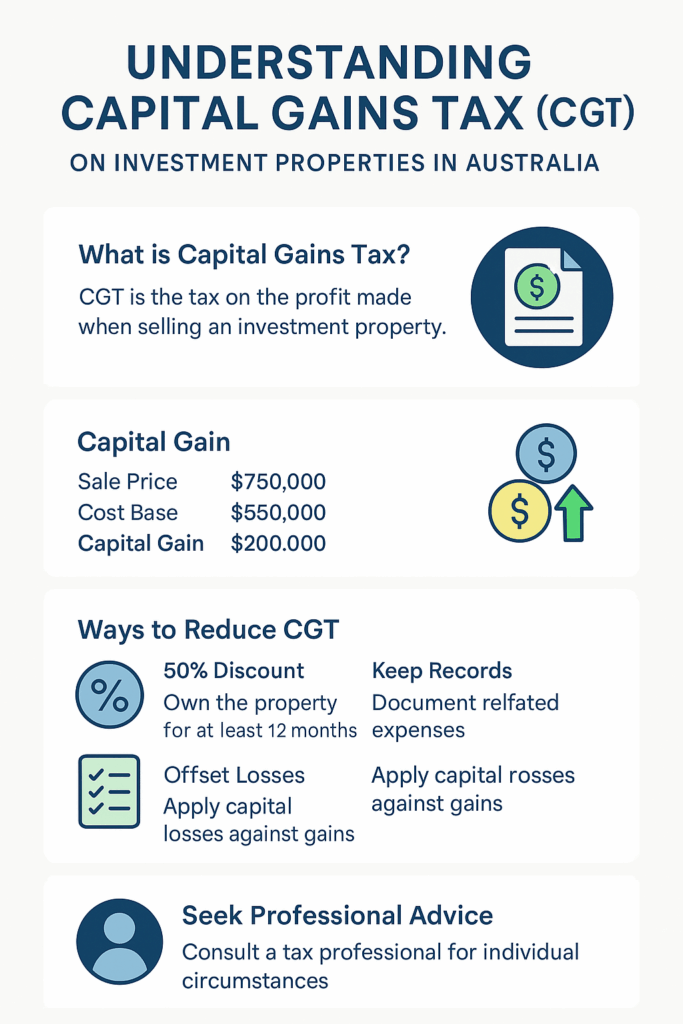
If you've owned the property for more than 12 months, you're eligible for a 50% discount on the capital gain. In the example above, only $100,000 would be added to your taxable income.futurerent.com.au
Keeping detailed records of all expenses related to the property can increase your cost base, thereby reducing your capital gain. This includes:propertytaxspecialists.com.au
If you've incurred capital losses from other investments, you can use these to offset your capital gains, reducing your CGT liability.starinvestment.com.au
Certain exemptions may apply, such as:
Consulting with a tax professional can help determine your eligibility for these exemptions.

Understanding and planning for CGT is crucial when selling an investment property. By leveraging available discounts, maintaining thorough records, and seeking professional advice, you can effectively manage your CGT liability.realestate.com.au
At Beyond Broking, we're here to guide you through the complexities of property investment and taxation. Reach out to our team for personalized advice tailored to your financial goals.